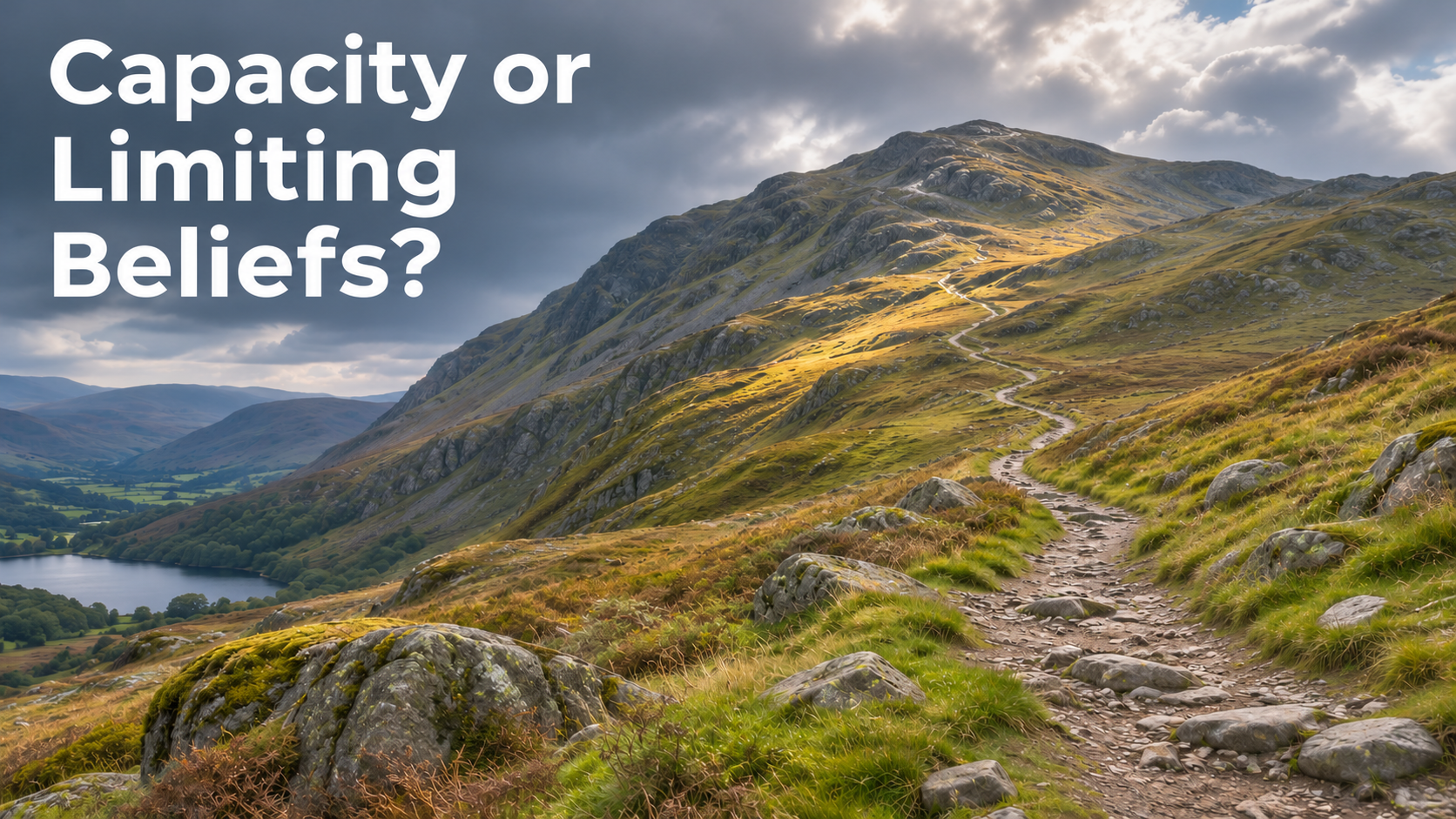
How do we recognise what we have capacity for, and when a belief might be holding us back?
I recently began running between 5 and 10 km, and noticed the importance of knowing this difference. Some days I need the wisdom to pace myself or slow down. Other days I might need determination to drive forward past a mental barrier.
It can also show up in other activities, for instance, writing. Sometimes the words flow effortlessly. Other times it feels like it’s never done, and I keep revisiting a piece, thinking, “It needs to be perfect.”
Another example might be starting a new habit or routine, where we tell ourselves, “I can’t do this”, “There’s no point” or “It’s too late to start”, but in reality we may simply be pushing ourselves beyond our limits.
Recently I was writing a blog post (it might have been this one), and by the end of the evening, I felt tired and wanted to rest. I listened to where my capacity was drawn, and left the writing unfinished, saving context for another time.
Recognising the difference between limiting beliefs and sensible choices takes careful attention and a willingness to explore those boundaries.
We sometimes place restrictions on how we create or move before we’ve given an idea room to develop. Artists know this. Dancers know this. Each of us discovers this in our own way.
We sometimes place restrictions on how we create or move before we’ve given an idea room to develop. Artists know this. Dancers know this. Each of us discovers this in our own way.
Limiting thoughts don’t necessarily look obvious. They might say we need a clear plan, a particular mood, or confidence before we can take action.
Fear of failure can keep us from taking action. Often we judge ourselves harshly, even though building skills takes time.
Instead of viewing our progress as a judgement of ourselves, we might notice how our ability develops gradually.
A growth mindset gives us room to learn through the journey itself. We can find value in working through a challenge, developing areas we find difficult while building on our strengths.
What could I learn by exploring without a solid plan, by simply viewing the whole picture?
What if I could direct my feelings and energy into the activity, whether it be writing, drawing or making music?
What might I learn about myself through living in the moment, bringing attention and energy into alignment?
That may look messy at first. Thoughts arrive in fragments. A few lines seem to lead nowhere. Movement feels unfamiliar. Giving the process a chance, and returning to it, can help skill and momentum develop.
Perhaps boundaries and beliefs share something in common: they reveal areas that challenge us. Instead of viewing those difficulties as a reason not to do the thing, we can lean into them.
Narrowing our focus towards those areas can help expand our capacity: a new movement or practice, a song we’ve never played before, staying in presence for a little longer.
What could I create in twenty minutes that carries meaning?
A piece of music, a drawing, a few thoughts about life, a poem I might share?
You might practise Qigong for two minutes, then work up to five minutes. Each time, noticing how your energy feels and whether you wish to continue.
This kind of experience gives you an opportunity to reflect and learn, without turning it into a test you have to pass.
As the practice takes shape, I can ask: what feels effortful or within my ability? What could I leave out? What needs space to develop? Where might I be holding a belief that keeps me from progressing?
What might you give yourself room to explore, at a scale that feels manageable today?





Leave a Reply