

For me, grounding means connecting with my body and what’s beneath, while feeling light and uplifted relates to awareness and alertness.
As weight settles downwards, the rest of the body responds. Lightness can emerge as we find an upright position that feels supported from below, rather than lifting upwards with effort.
In Qigong, we explore this through noticing what changes as we adjust posture, breathing and attention.
Sinking Qi and lifting the spirit
We often hear about sinking the Qi to the Dantian. We may hear less about the upward movement alongside that settling, especially when learning the mechanics and form.
In classes, I often invite people to notice weight settling towards the ground. Though with the feet already on the ground, you might wonder what else can settle…
When sinking the weight, the pelvis and tailbone may lower slightly as the knees soften and bend a little. This posture supports grounding and settling Qi into the Dantian.
Sitting back slightly into the kua, we can feel how the hips connect through the legs to the ground. When standing centrally, weight rests evenly across both feet.
Aside from physically lowering, we might focus on adjusting how we organise our weight and muscular effort. Contact through the feet can feel different, and softening tension can ease breathing.
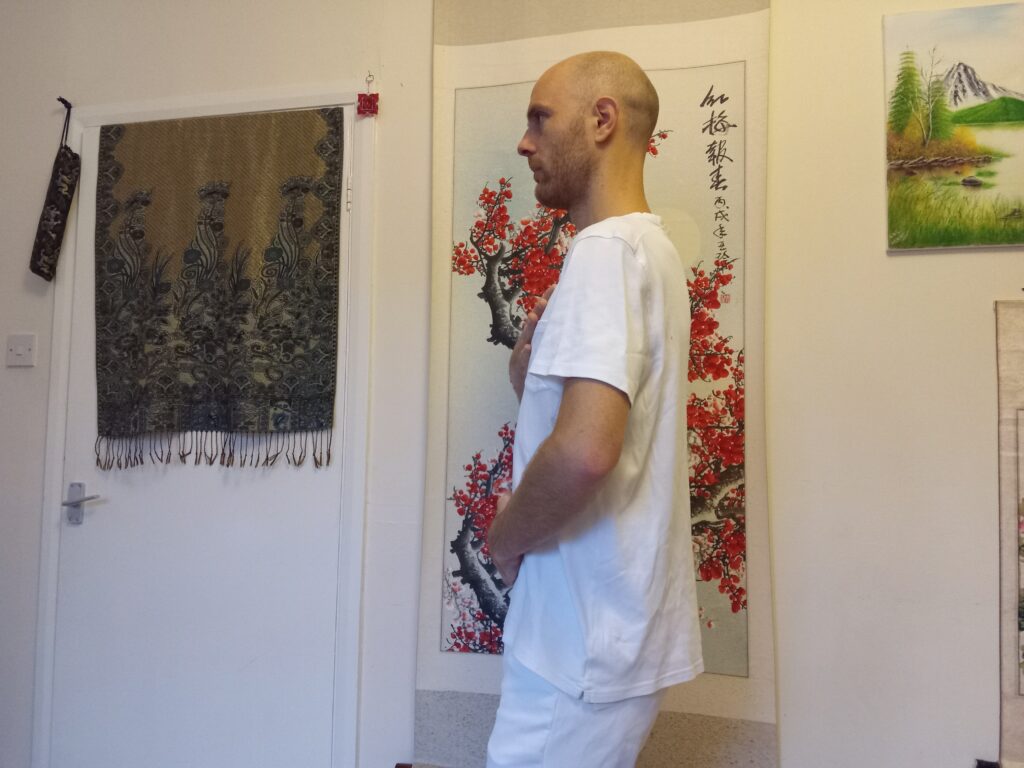
As the weight settles through the legs, the waist and lower back can soften while the spine lengthens upwards, creating a feeling of lightness from the crown, with the body’s weight settling beneath it. Sometimes this feels like suspension from the crown, as though an invisible thread were pulling gently upwards.
Energy, movement and intention
Bringing awareness towards the lower Dantian centres our energy and attention within the body, connecting us with the support of the earth beneath our feet and the openness of the heavens above. As we settle, the head can feel light and the body remain grounded. This awareness can extend outwards into our environment.
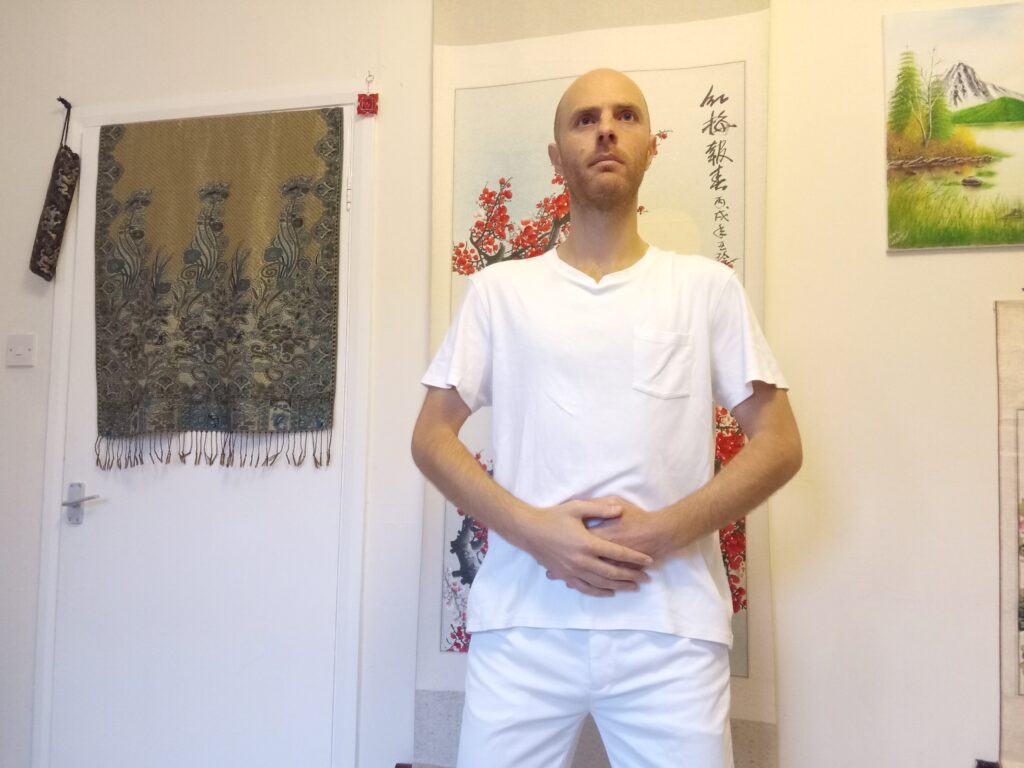
We might describe the sense of weight and fullness as heavy Qi, and the lightness and expansion as light Qi.
Sometimes I experience this as a sense of filling from within, like water filling a cup. As we soften unnecessary effort, we can notice how energy emerges as we settle and rises with that support. Settling the Qi can support the calm, alert presence we associate with Shen, or spirit.
Movement also plays a part, helping us open and connect through the body, described in traditional practice as opening the channels. Sometimes that means moving slowly and noticing how movement connects through the body.
As branches of an oak extend from its trunk and sway with the wind, so too can our arm movements extend from our spine and core.
I think of this often in Gather the Heavens. That sense of upliftment arises from a connection down to the Earth. Energy moves from the feet through the legs, waist and torso into the arms, with room for softness as we move.
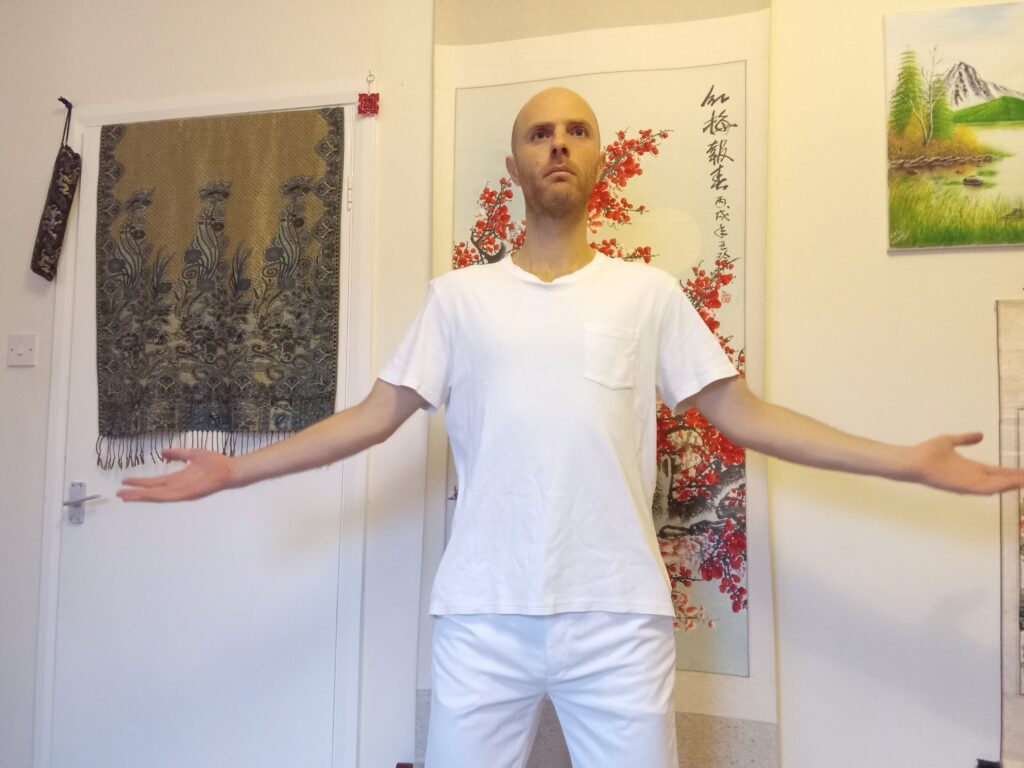
Yi, often translated as intention, guides the direction of energy and movement. Through practice, we can notice the interplay of sinking and lifting, opening and closing, stillness and movement: different expressions of yin and yang.
A river already has its own current. Guiding a boat means sensing that current and steering within it. Natural flow and intention work in a similar way: movement and breathing have their own rhythms, while Yi helps guide where we go and how we respond. Together they form a sense of natural and effortless flow, sometimes described as wu wei.
When lifting a kettle, for example, we can feel the support through our feet, move the hand towards the handle, connect with its weight and notice how our stance and the rest of the body participate. By using the arms, core, pelvis and legs to support the lift, we can release excess effort around the shoulder.
Intention gives the action direction; contact with the kettle helps us adjust. Before lifting, we may anticipate its weight. As we take hold and begin to lift, we sense how full it feels and respond through our grip, stance and movement. Practice brings that ongoing exchange between intention and response into awareness.
Bringing it into daily life
Aside from lifting kettles with ease, attention to the body can support us during mental work.
During focused work, attention can gather around thinking ahead or working through a problem. This can feel like drawing a lot of energy upwards into the realm of Shen, or spirit. We might notice tension in the lower body, or find the heart-mind agitated and at unrest.
Stepping back brings posture, breathing and the contact beneath our feet into awareness. Grounding draws attention towards the lower Dantian and our connection with the earth.
Combining this with short movement practices and mindful breathing can help cultivate energy and reconnect in a way that supports clear thinking. Feeling settled and awake can support each other as we return to the task.
With repetition, the contact beneath our feet or the movement of a breath can become familiar points of return during work, conversation or activity. We may notice a change in posture or effort while continuing what we’re doing. Grounding can then participate in the activity itself, alongside thinking and responding.
A simple practice
Here’s a simple practice to integrate these ideas. You can explore it standing or sitting.
Feel the contact beneath your feet and, if seated, the support of the chair. Take time to sense your posture and breathing.
If standing, you might gently rock forwards towards the balls of the feet and back towards the heels, then settle where you feel balanced, keeping contact through the feet. Find your centre of equilibrium through dynamic shifting and awareness, rather than rigid focus.
As you shift weight laterally, feel how support transfers from one leg to the other.
Explore a small adjustment that helps your head balance comfortably above your body.
Sense the weight settling through your legs and the length through your spine. Include the movement of your breathing.
Keep your gaze easy and remain aware of your surroundings.
What do you notice? How can your thinking remain connected with your body, energy and how you feel?






Leave a Reply